- Have any questions?
- +971 50 7210729
- +971 2 2358552
- info@almerzaam.com


How Does Water Pollution Affect Human Health?
June 14, 2026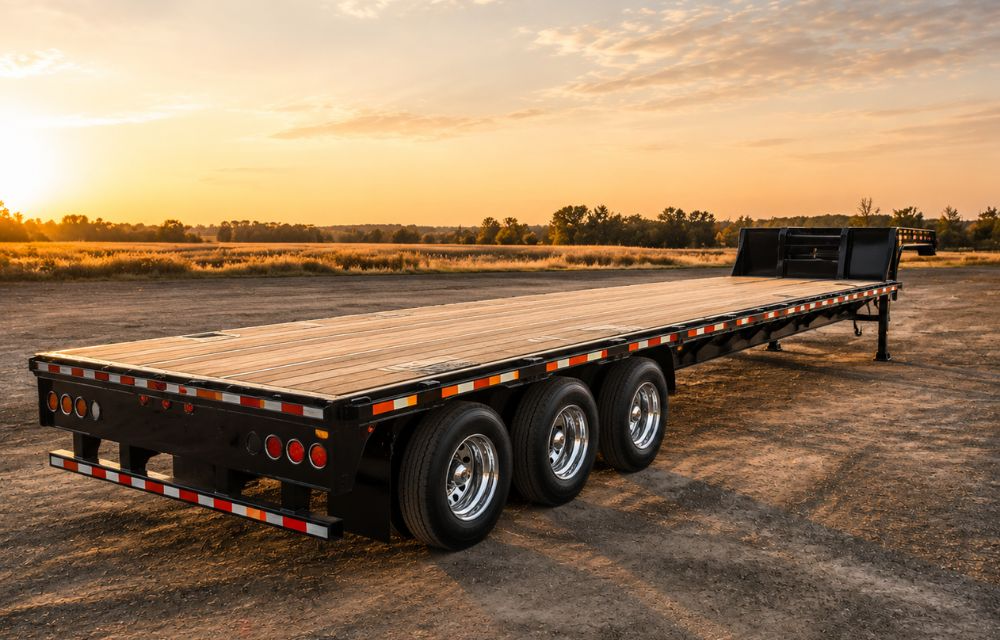
Introduction
In the world of logistics, transportation, and construction, not all cargo can be loaded into an enclosed truck or container. Oversized machinery, steel structures, construction equipment, prefabricated building components, and large industrial goods all require a different type of transport solution — one that accommodates their size, shape, and weight without the constraints of an enclosed vehicle body. Flatbed trailers are the answer to this logistical challenge. Widely used across Abu Dhabi’s active construction and industrial sectors, flatbed trailers in Abu Dhabi are an essential part of the region’s transportation and project logistics infrastructure. This blog explains what flatbed trailers are, how they work, and what makes them so important in heavy-duty cargo transport.
What Is a Flatbed Trailer?
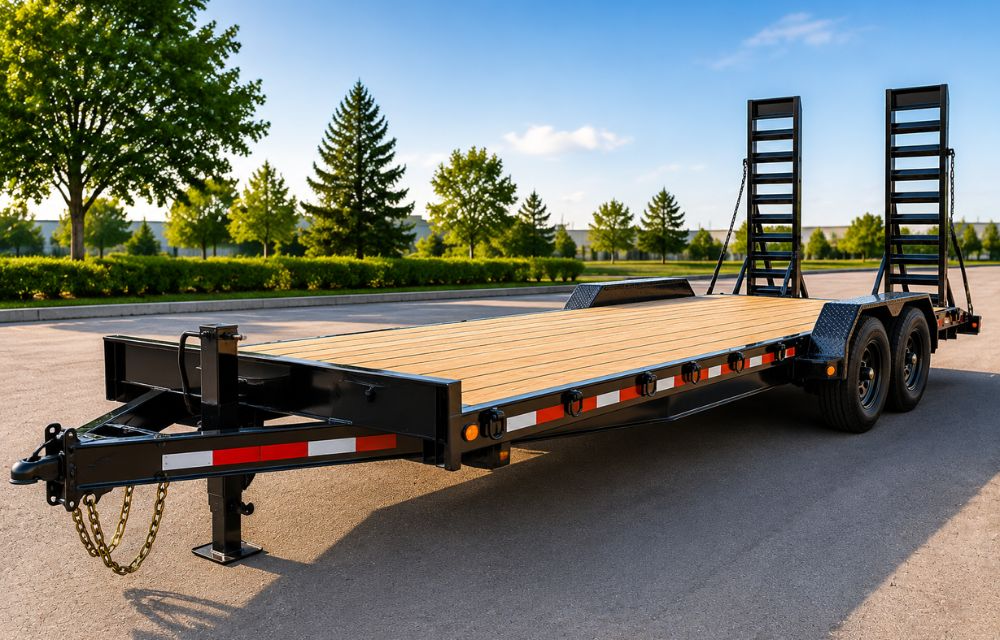
A flatbed trailer is a type of semi-trailer that consists of a flat, open platform — the deck — mounted on a wheeled chassis that is towed by a heavy-duty truck tractor. Unlike enclosed trailers, a flatbed has no sides, no roof, and no rear doors. This open configuration is what makes it so versatile for transporting cargo that is either too large, too tall, too wide, or too heavy to fit inside a standard enclosed trailer.
The absence of walls and a roof means cargo can be loaded onto the flatbed from any angle — from the front using a crane, from the sides using a forklift or reach stacker, or from the rear using a ramp where appropriate. This loading flexibility is one of the most practically valuable features of flatbed trailer transport.
How Flatbed Trailers Work
The flatbed trailer is connected to the truck tractor through a fifth wheel coupling — a large circular coupling mechanism on the rear of the tractor that accepts the kingpin mounted on the front underside of the trailer. This coupling allows the trailer to pivot relative to the tractor when turning, which is essential for navigating the tight turning requirements of urban environments and construction sites.
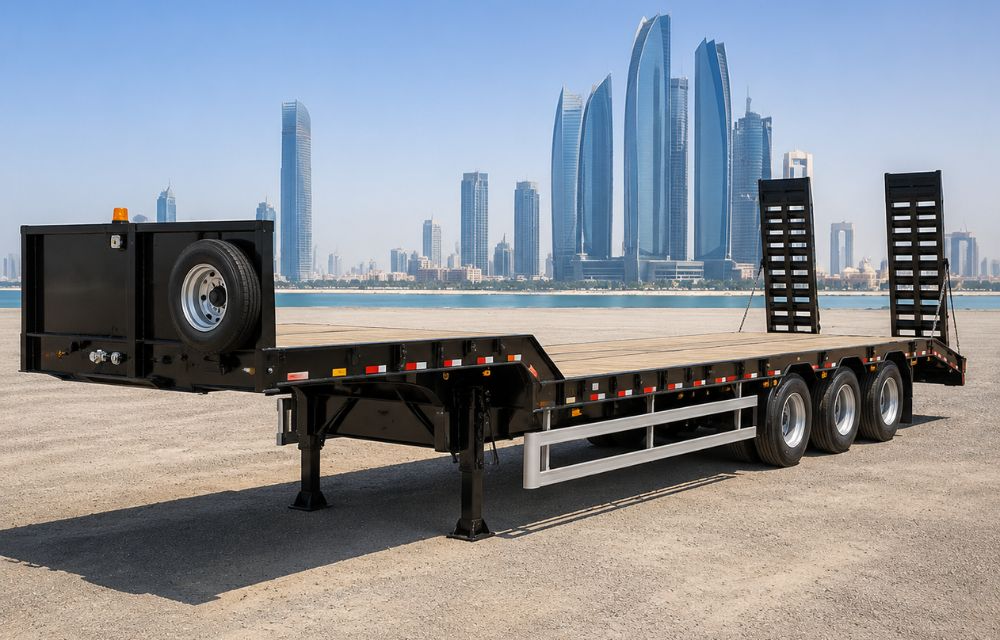
The trailer deck is supported by multiple axles — typically two or three for standard flatbeds — which distribute the load weight across the road surface. For very heavy loads, additional axle groups may be added, and specialist multi-axle low loader configurations are used for the heaviest industrial and infrastructure cargo.
Cargo loaded onto a flatbed trailer is secured using a combination of chains, ratchet straps, binders, and sometimes specialist clamps or frames that are attached to anchor points built into the trailer deck. Proper cargo securing is both a safety requirement and a legal obligation — unsecured or improperly secured loads on flatbed trailers represent a significant danger to road users and are strictly regulated.
Types of Flatbed Trailers
Standard Flatbed
The most common type, featuring a flat deck at a standard height above the road. Suitable for a wide range of cargo including steel materials, machinery, construction equipment, and prefabricated structures.
Lowboy (Low Loader)
A lowboy trailer has a very low deck height — achieved by using a dropped centre section between the front and rear axles — which allows taller loads to be transported while remaining within height limits on public roads. This type is widely used for transporting heavy construction equipment such as excavators, bulldozers, and cranes.
Step Deck (Drop Deck)
A step deck trailer has two deck levels — a higher front section and a lower main deck. This allows taller cargo to be carried on the lower deck while maintaining an acceptable overall height. It is useful for loads that are too tall for a standard flatbed but do not require the fully dropped profile of a lowboy.
Extendable Flatbed
Some flatbed trailers are designed to extend in length to accommodate extra-long cargo such as wind turbine blades, bridge girders, or long pipe sections. The extendable mechanism slides on rails and locks at the required extended length.
Related Blog – What are the key features of a Quality Flatbed Trailer?
Applications of Flatbed Trailers in Abu Dhabi
In Abu Dhabi’s active construction, oil and gas, and infrastructure sectors, flatbed trailers in Abu Dhabi are in constant demand. They are used to transport construction equipment to and from project sites, to move prefabricated structural steel and concrete elements, to deliver large industrial machinery to facilities, and to transport oversized project cargo between ports, storage areas, and end-use locations.
The heavy infrastructure investment associated with Abu Dhabi’s ongoing development programs continues to drive strong demand for flatbed trailer services across the emirate.
Conclusion
Flatbed trailers are among the most versatile and indispensable tools in the heavy logistics sector. Their open platform design, load flexibility, and availability in multiple configurations make them the transport solution of choice for a huge range of oversized, heavy, and awkwardly shaped cargo that cannot be accommodated in standard enclosed vehicles. For businesses in Abu Dhabi requiring flatbed trailers in Abu Dhabi for construction, industrial, or project cargo transport, working with an experienced and properly equipped transport service provider is essential for safe, compliant, and efficient cargo movement.